QR Codes for New Year Cards
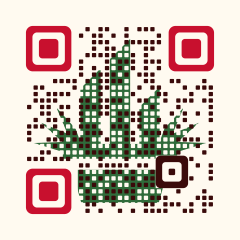
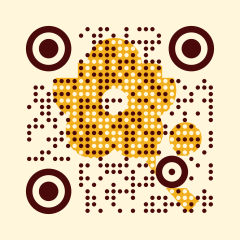
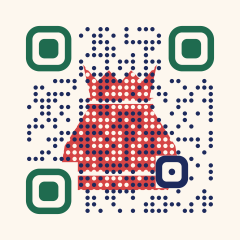
A kadomatsu, an apricot blossom or a lucky pouch drawn between the code’s dots, for the cards a shop sends at New Year.
Free plan: 3 dynamic codes and unlimited static codes · No credit card
The short answer
Choose the theme that matches the card’s custom in the editor’s Style tab: Japanese New Year · kadomatsu for nengajō, Tết · apricot blossom for Vietnam and Seollal lucky pouch for Korea. Each stays a standard QR code that ordinary phone cameras read, with error correction set to level H. Print it at least 2.5 cm (1 in) wide and link it to something useful, such as holiday opening hours, a booking page or a lucky-bag page. For 2027 nengajō, Japan Post accepts cards from 20 December and asks for them by 27 December to arrive on 1 January.

How to add a QR code to New Year cards
Match the theme to the custom
Use Japanese New Year · kadomatsu for nengajō, Tết · apricot blossom for Vietnamese customers and Seollal lucky pouch for Korean ones. These are separate customs with their own dates; the Chinese Fu-character themes are not a substitute.
Point the code at practical information
Holiday closing and opening days, a New Year booking page or a lucky-bag (fukubukuro) page. Practical pages suit every recipient.
Create a dynamic code
Save a dynamic URL code per card design. Cards are printed in November or December and kept for weeks, so the page will need updating after the holiday.
Write your own greeting
The Greeting card layout under Print design takes your own headline and second line, so you can write the greeting in Japanese, Vietnamese or Korean, or leave it out.
Proof on the real card
Print one card on the stock you will use, including the postcard stock for nengajō, and scan it with an iPhone and an Android phone before the full run.
Size, distance and placement
- Code type
- Dynamic URL code with a New Year theme; standard QR, level H error correction
- Nengajō postcard
- At least 2.5 cm (1 in) on the picture side, away from the address side
- Shop counter card or door sign
- Read from 1 m: about 10 cm (4 in)
- 2027 nengajō
- On sale from 2 November 2026; Japan Post accepts them from 20 December; post by 27 December for 1 January delivery
- Tết and Seollal 2027
- Tết on 6 February; Seollal on 7 February, with the Korean holiday on 6–8 February and a substitute holiday on 9 February
- Families in mourning
- In Japan they do not send nengajō that year; a plain card with practical information still fits
- After the holiday
- Repoint to your regular hours, a spring offer or next year’s booking page
Why New Year cards should carry a dynamic code
New Year cards are written weeks before the holiday and kept long after it: nengajō for 2027 went on sale on 2 November 2026, and Japan Post starts accepting them on 20 December for delivery on New Year’s Day. Opening days, lucky-bag stock and booking slots are rarely final that early. A dynamic code lets you print now and settle the page later, then switch it to your regular hours once the holiday is over. The same approach works on a Tết or Seollal card with the matching theme, a few weeks later. Themes are free, and the free plan covers 3 dynamic codes.
Common mistakes
Tip: keep the page behind the code practical rather than celebratory. Opening days, booking links and directions are useful to every recipient, whatever their year has been.
Frequently asked questions
Can I put a QR code on a nengajō?
Yes. Print it at least 2.5 cm (1 in) wide on the picture side of the postcard and link it to your New Year hours or booking page. The Japanese New Year · kadomatsu theme draws a kadomatsu between the dots.
Is there a QR code theme for Tết?
Yes. Tết · apricot blossom draws a yellow blossom between the dots, with red corner markers. It is free, uses error correction H and remains a standard QR code.
Which date is Seollal in 2027?
Seollal falls on 7 February 2027, a day after Tết on 6 February. The Korean holiday runs from 6 to 8 February, with a substitute holiday on 9 February.
Should the code carry a New Year greeting?
The code itself only opens a page. Write the greeting on the card in your own words, or leave it out, and keep the page behind the code practical.